Saturday, May 16, 2009

Dear Detroit

"Ballroom, Lee Plaza Hotel" from "The Ruins of Detroit"

It seems like a lot of people have recently been paying attention to Detroit aside from talking about the crisis in the automotive industry. For example, there are projects like Habitat for Hamtramck which is a grassroots organization working to revitalize the Hamtramck area by rehabilitating vacant houses (Hamtramck is a city surrounded by Detroit).

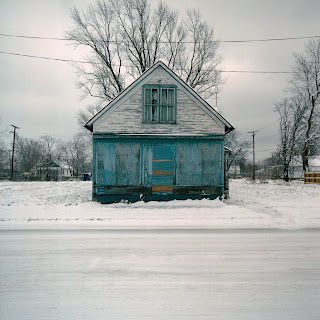
There also some amazing photo essays which capture the faded beauty of the city like the series titled "The ruins of Detroit" by Yves Marchand and Romain Meffre (I found these pictures on time.com - which also gives a bit more info on the buildings) and "100 Abandoned Houses" by Kevin Bauman. There are so many stories in these pictures, in these old and fading places.


The following pictures are from "The ruins of Detroit":


"United Artists Theater"

"Broderick Tower"

"Fisher Body 21 Plant"

The following pictures are from "100 Abandoned Houses":


Wednesday, May 13, 2009

Love for the Late Bloomers

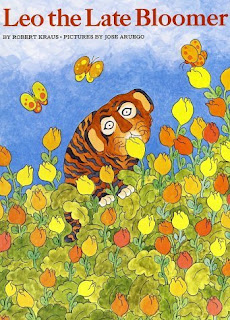
Leo the Late Bloomer by Robert Kraus, illustrated by Jose Aruego

A friend of mine, in his mid-30s, finally feels that he is finding his groove in his art. A little guy I know, on his way to three, kept his words to a minimum for a bit longer than most. Now he talks a mile a minute. Late bloomers can be those who blossom in beauty or skill or talent later in life. Sometimes that blossoming comes without effort, but sometimes there's some tilling to do. I recently revisited a New Yorker article, "Late Bloomers: Why do we equate genius with precocity?" by Malcolm Gladwell who I still find to speak eloquently about and for delayed genius:

"But sometimes genius is anything but rarefied; sometimes it’s just the thing that emerges after twenty years of working at your kitchen table."

Here are some of my favorite late bloomers:

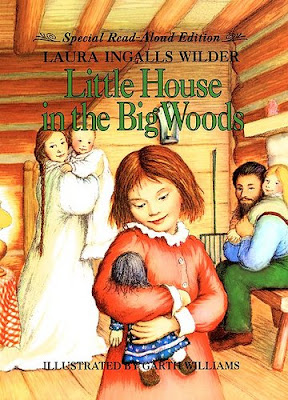
Mrs. Wilder's 1st book of the Little House series was not published until she was 65 years old.

Julia Child become a PBS starlet. At 51.
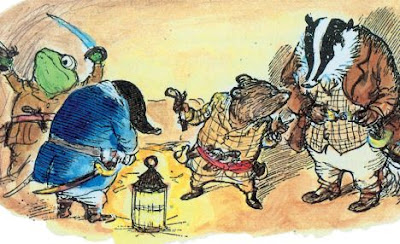
Kenneth Grahame published his first book, the children's book classic Wind in the Willows when he was 49.

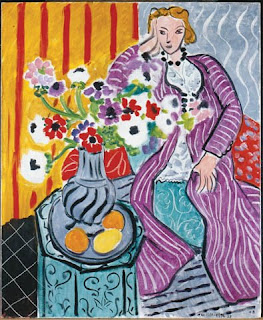
Purple Robe and Anemones," 1937
Many believe that Matisse only started to become the artist we know him to be when he was 35.

Charles Bukowski, the poet, only BEGAN to write poetry when he was 35.

image by mion.ml

Forget summer flowers, chrysanthemums give your gardens color in the fall.

And isn't the story of the ugly ducking really the story of a late blooming beauty? Personally, I like this version best (watch and just try not to tear up):


Disney's "Ugly Duckling" (1939)

Monday, May 11, 2009

Celebrate....

Children's Book Week!

Image courtesy of Children's Book Council

You must remember it from elementary school (for me the memory includes "READ" posters decorating the halls and free bookmarks!) and it is still around.
"It all began with the idea that children's books can change lives. In 1913, Franklin K. Matthiews, the librarian of the Boy Scouts of America, began touring the country to promote higher standards in children's books. He proposed creating a Children's Book Week, which would be
supported by all interested groups: publishers, booksellers, and librarians. Mathiews enlisted two important allies: Frederic G. Melcher, the visionary editor of Publishers Weekly (the publishing industry trade journal), and Anne Carroll Moore, the Superintendent of Children's Works at the New York Public Library and a major figure in the library world. With the help of Melcher and Moore, in 1916 the American Booksellers Association and the American Library
Association cooperated with the Boy Scouts in sponsoring a Good Book Week. At the 1919 ABA convention, the Association committed to the organization of an annual Children's Book Week. A few months later, the official approval of the American Library Association was also secured during its first Children's Librarians session." -
CBC website
I was a total bookworm as a kid and things like Book Week, summer reading lists, and the traveling school book fairs were so exciting to me. Worm or not , however, most of the kids I knew liked Book Week because our elementary school had a poster contest and the winner had their artistic venture displayed in.....the cafeteria! That was school-wide celebrity, the bigtime. I never made it there, but I'm not bitter. Now, I love seeing the art selected every year for the National Children's Book Week poster, such as the image above by illustrator Ian Falconer. I also recently discovered that for simply the cost of postage you can get your very own Book Week poster. What a nifty collection to start- my request is already in the mail.
This week I'll be celebrating more than my free poster. I will be participating in the Book Week program at my local library, being grateful that someone recognized children's books can change lives and created a whole week about just that.

The vintage child

There's something about vintage children's clothing that makes my heart ache. The fine details, the careful stitching, the simplicity. Classic garments like these make me wish I could outfit my own children in wardrobes from the 1930s.


These embroideries on vintage sewing patterns by Gina at doe c doe are the perfect celebration of vintage dresses. Imagine a grouping of these on a little girl's bedroom wall:


Vintage doll clothes are just as inspring. These come from the collection of retro (and craft) queen, Hillary Lang via her flickr group:


Why oh why don't children dress up anymore?

Pretty Cool Pix Project

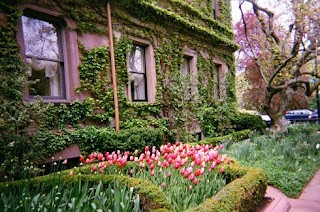
(This photo makes me miss Boston in the spring.)

"The Anonymous Photo Project" is such a neat little idea I found via apartment therapy. Though out of Vancouver, packages with disposable cameras are left in counties from Mexico to Australia for people to discover and take and snap away. The cameras are then returned, developed, and posted on the website where you can find lots of the fun snapshots that amateurs take (I am, of course, speaking as one). However, sometimes on a roll of lounging pets, friends making faces, and the accidental picture without a flash - there are some truly striking photos. I like that these lovely pictures are not taken by professionals or with fancy cameras - they are just stumbled upon gems. I know that people do something similar at weddings, but wouldn't it be a great project to do with different kinds of groups of people? I'd like to give a class of second graders cameras and see what they see. These are a few of my faves...

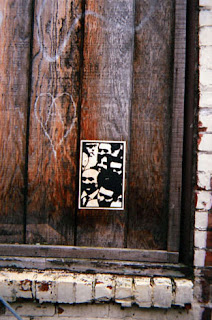
(Love the white brick frame, chalk heart, and textured wood.)

(Noticed the reflection first, but returned for the black leafy tree against blue sky.)

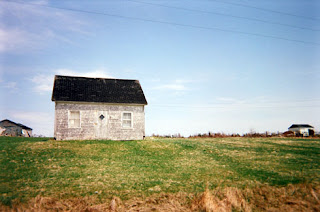
(Feels so lovely and lonely - I think it's the position of the camera that does it.)

Thursday, May 7, 2009

Rainstorm Brainstorm

Once upon a time my job was working with kids. One thing that seemingly makes all children restless is a string of rainy days - the kind that are too raw and soaking for puddle jumping or worm watching. Sometimes filling these stormy hours can be a challenge, so on this rainy day I thought I would share one of my old favorite projects.

It starts with Planting a Rainbow by Lois Ehlert. This book is an ideal introduction to gardening- simple, informative, and bursting with color. As the reviewer from School Library Journal writes:

"A young child relates in ten simple sentences the yearly cycle and process of planning, planting, and picking flowers in a garden. Mother and child plant bulbs in fall, order seeds from catalogs in winter, eagerly anticipate the first shoots of spring, select seedlings in summer, ``and watch the rainbow grow,'' reveling in the opulence of color. The power of this book lies in the glowing brilliance and bold abstraction of the double-page collages. Ehlert combines simple, stylized shapes of flat, high intensity color into abstract yet readily identifiable images of plants and flowers while clearly and colorfully labeling each plant on an adjacent garden marker. " - Pamela Miller Ness

No doubt this book would also be the perfect thing to read before planting the first seeds or bulbs in the garden with your kids, but it also happens to be the inspiration for a pretty great art project. A flower border for a playroom or bedroom filled with blossoms likening Ehlert's stylized blooms, but created by the aforementioned restless child/children. All you need to create your own garden is a stack of colorful construction paper, scissors, glue, and either a wide roll or large sheets of white paper- from there it is simply a matter of cutting, pasting, and creating....


Reason to love rain (#3)


"Fog"

by
Carl Sandburg

The fog comes
on little cat feet.

It sits looking
over harbor and city
on silent haunches
and then moves on.


image by Steve Kay


images by Annadriel and James Jordan


image by marmota


photographs discovered on Colourlovers (there are more too!)

Wednesday, May 6, 2009

Inspiration in stones

Allison Arieff wrote an interesting article for the New York Times called "Searching for Value in Ludicrous Ideas" about Steven M. Johnson who is a jack of all things whimsical. Johnson is an inventor, urban planner, thinker outside the box, and Arieff relishes his quirkiness. She writes:

In discussing his often fantastical, sometimes silly, sometimes visionary concepts, he has said, 'If I could use two words to describe what it is that I enjoy it is that I love to be sneakily outrageous . . . [It may be that] I have decided an idea has no practical worth and would never be likely to be adopted seriously (like most of my ideas), but I like it anyway.'"

I find Johnson's work interesting and fun, but I really appreciate what his work represents and the aspects that Arieff highlights - playing with absurdity, putting on some silliness, and in the process maybe creating something divine.

I recently found knitalatte's shop on etsy and what I love love love about her photographs is that she took something familiar, like the still life, and did something odd to it - she photographed rocks. In sweaters. Sounds silly, but how cool are her pictures? The sweater patterns look like flowers, spider webs, snow flakes and with the combination of colors and patterns and juxtaposition of objects - each of these images tell such a story. I'm glad the artist thought: why not? because the discovery of these pictures makes me very happy.

Tuesday, May 5, 2009

Cover Girl

What is it they say? Never judge a book by its cover?

I don't know about you, but more than once I have swooned over a book for its looks - Lisbeth Zwerger's illustrated L. Frank Baum's The Wizard of Oz is definitely one of them.

The ethereal quality of Zwerger's illustration always catches my eye. However, many of her early works, in which she focuses on the mastery of line, employ limited color. She tended to work in a muted palette, sharpening her skill for gesture and expression. These illustrations are beautiful too, don't get me wrong, but in her version of The Wizard of Oz there is a vibrancy and vitality that comes from an expanded palette and the perfect marriage of line and color.

I read that Zwerger was relatively unfamiliar with Baum's tale and I think that makes her artistic representation of the story truly unique. She creates a brand of quirky and unexpected individuals - a tomboy Dorothy, an actual lion, a rotund Scarecrow, and a somewhat familiar lanky Tin Man.

One look at this book's cover and you know it is a different take on Baum's world.

Image courtesy of www.everypicture.com

A listless Dorothy rests in the arms of Scarecrow and the Tin Man as they tentatively navigate the sea of seemingly six-foot poppies. The distinct stem and blossom shadows create further depth and confusion. Muted colors reflecting in the Tin Man are a wonderful detail.
Something new is happening here- a re-imagining of an old favorite- and the cover is just the beginning.

Friday, May 1, 2009

Happy May Day

image via ToxicInk

Though May Day is not a huge American holiday - I do like the idea of celebrating the beginning of spring with the image of children twisting and turning and learning to dance in a tumble of brightly colored ribbon.


by Andrew Hudgins

Ribbons, pearl and purple,
dangle from the maypole
down to the pale
hands of children, who pull
them, giggling. They purl
in breezes, and almost rumple.
Under the old eyes of a principal
whose narrow glance is ample
to subdue but not appall,
the children spill
around the skinned and limbless maple
as if outside the temple
of a declining god of simple
rituals easily met. Bells peal.
Old tunes impose their spell
on the awkward small feet they impel
around the resurrection pole.
The pattern’s simple,
plaiting boy to pearl
and girl to purple,
and when their fingers touch the pole
and the ribbons, at last, rumple,
no lips purse, no faces crumple
except one teacher’s, and I can’t spoil
the day’s innocent and uninnocent appeal,
which terminates April’s cold intermittent pall.

poem found in "The Atlantic" magazine

LinkWithin

Related Posts with Thumbnails